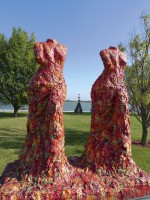
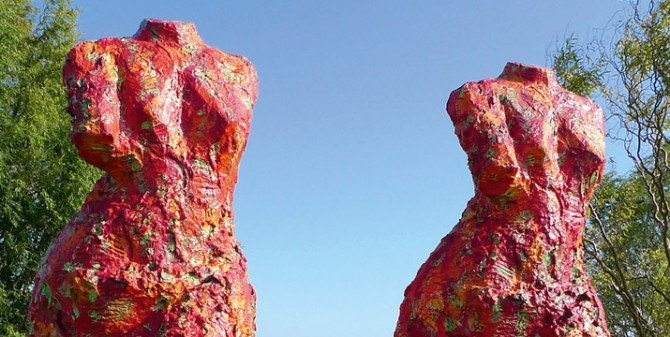
Initially Jim Dine was associated with Pop art, but his prolific oeuvre ranges from Happening, painting, drawing, graphic art, illustration, object, sculpture and set design to poetry. He uses a variety of techniques, including mixed media, assemblage, readymade, graphic and painting techniques, developing his own technology of painting. The range of themes is limited to exploring the same motif in replication or series arrangement, executing it in different media as diptychs and triptychs. Dine invested everyday items with personal significance and they became the key theme in the 1960s. The bathrobe became a symbol for the artist himself. His works often took on a schematic character based on linear contour and vivid spatial colours. In the 1970s his style transformed into a refined idiom; the artist strove to express the emotional almost romanticising effect. He places emphasis on the sweeping painting gesture, combining it with splashes of paint and miniature drawn structures. His palette is reduced to darker hues. Dine was championed as a forerunner of the Neo-Expressionists movement which celebrated a return to individualised, gestural and expressive painting. Since the 1980s he has been primarily concerned with sculpture. One of his motifs is the statuette of the Venus de Milo he bought as a souvenir. This figurative model was rendered in different media. He also modelled it in clay and then he created a series of woodcuts in Cubist stylisation. This ancient figurative motif reflected the new expressive qualities of his work. The group sculpture Double Torso draws on his experience in rendering the ancient motif. The upper part shows an almost identical posture as in the Cubist series; the lower part displays the shapes of a folded robe. In this half-naked torso Dine seems to have connected both principles of his work, robe and figure. The vibrating structures of the sculpture’s surface capture light, producing an expressive visual play. The almost identical figures, their postures, their left leg put forward and their modelling attest to Dine’s principle of repetition of the motif in diptychs. The comparison with the Double Isometric Self- Portrait (robe) from 1964 shows a new dimension of Dine’s artistic reflection.